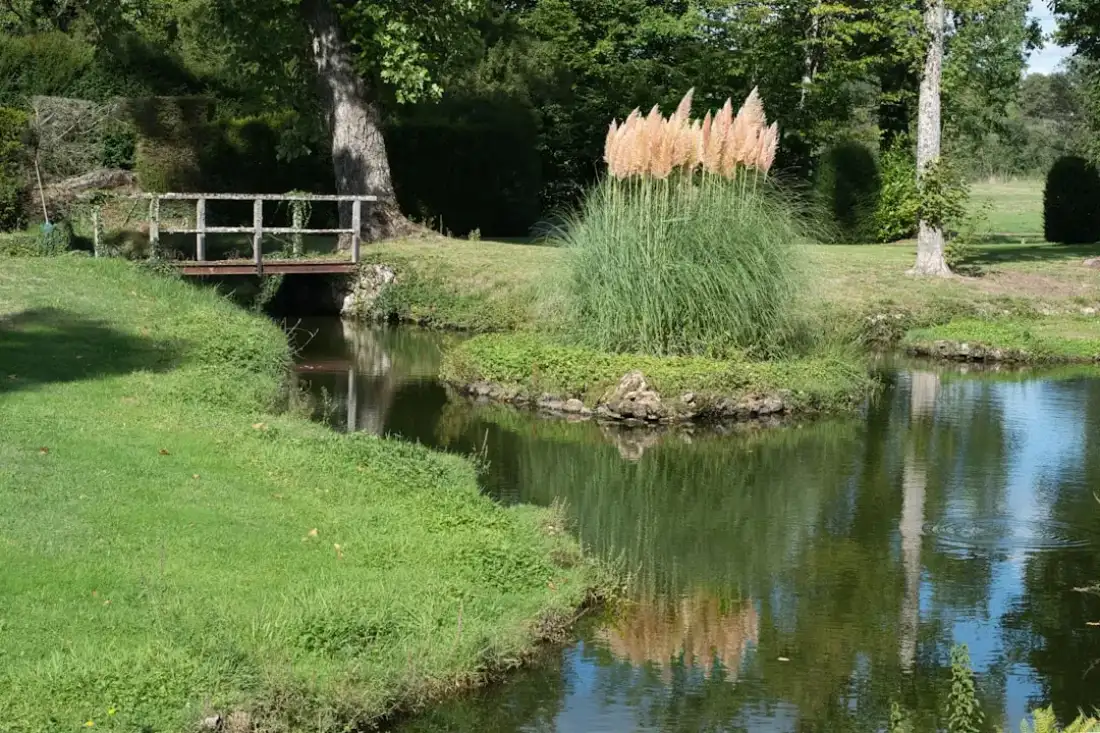
What is a swimming biotope
The term biotope refers to an environment where a community of organisms lives. A swimming biotope is an artificially created aquatic ecosystem that maintains clean water on its own: wetland plants, microorganisms in the gravel, plankton and small aquatic animals absorb nutrients before algae can grow from them. Humans add only a pump that slowly circulates the water and a skimmer that collects leaves from the surface.
Compared with swimming pond A biotope typically has a larger proportion of the plant zone and gentler banks, so it appears as a natural pool rather than a reservoir. The boundary between these two concepts is fluid; in practice, it depends on how much space you wish to allocate for swimming versus planting.
How a biotope cleans water
- Mechanically. The skimmer removes leaves, pollen and insects from the surface; the gravel bed traps fine silt.
- Biologically. Bacteria on the gravel surface break down organic matter into nutrients that are absorbed by plant roots.
- Through competition. Plants and zooplankton consume nutrients and light, leaving algae to lose out.
The result is water that is clear to the bottom, with a natural tint and no odour. The key is the ratio of surface areas to depths, so we devote more time to the design than to the excavation itself.
A biotope is not a maintenance miracle. It requires spring silt removal, trimming of plants and occasional leaf clearing. However, it involves an order of magnitude less work than a pool with chemicals and a filter, which needs weekly monitoring.
Who is a biotope pond suitable for?
- For gardens where water looks natural and functions in autumn and winter, not just during the swimming season.
- For families who do not want chlorine and chemicals on their children's skin.
- For plots with ample space: a naturally functioning biotope generally requires 60 m2 or more so that the plant zone can effectively clean the swimming area.
- For everyone who wants life around water: frogs, dragonflies, birds at the drinking trough and blooming irises in June.
Where space is limited, we design swimming ponds with technical support or natural pools where plants play a secondary role and cleanliness is maintained by a biological filter.
Biotope and permits
According to the Building Act, a water reservoir up to 40 m2 on a detached house plot, at least 2 metres from the boundary, is classified as a minor structure requiring no permit or notification. Biotope ponds are usually larger, so expect to submit a notification to the building authority. If the biotope has an inflow or outflow, or a volume exceeding 300 m3, the water rights authority must also issue a statement. We will prepare the documentation and handle the notification on your behalf; however, each authority assesses cases slightly differently, so we ask in advance.